Views: 0 Author: Site Editor Publish Time: 2025-09-18 Origin: Site


Wood floors are a beautiful, timeless addition to any home. But keeping them clean without damaging the finish can be tricky. In this guide, we’ll explore what to mop wood floors with, including the best mops, cleaning solutions, and techniques to make your floors shine for years.
Using the wrong mop can ruin your hardwood. Too much water, abrasive fibers, or harsh chemicals can cause warping, scratches, or dulling. The right tools remove dust and grime safely.
Microfiber Mop: Traps dust and hair, prevents streaks.
Spray Mop: Delivers controlled cleaning solution, lightweight.
Spin Mop: Ideal for deep cleaning, wringable, handles heavy dirt.
String Mop: Covers large areas quickly but holds too much water.
| Mop Type | Pros | Cons |
|---|---|---|
| Microfiber | Gentle, reusable, traps dust | Needs regular washing |
| Spray Mop | Lightweight, precise cleaner application | Requires refilling |
| Spin Mop | Removes stubborn dirt effectively | Large storage footprint |
| String Mop | Fast for big areas | Too much water retention |
They all work, but controlling water and avoiding rough fibers is key.
Wood is sensitive to pH and moisture. Acidic cleaners like vinegar or lemon juice can damage the finish. The safest options are pH-neutral or wood-specific cleaners.
1. Hardwood Floor Cleaner: Ready-to-use, fast-drying, safe on sealed wood.
2. Multi-Surface Cleaner: Disinfects non-porous floors and adds a fresh scent.
3. Homemade Mix: Warm water + a few drops of natural dish soap. A small splash of olive oil adds shine.
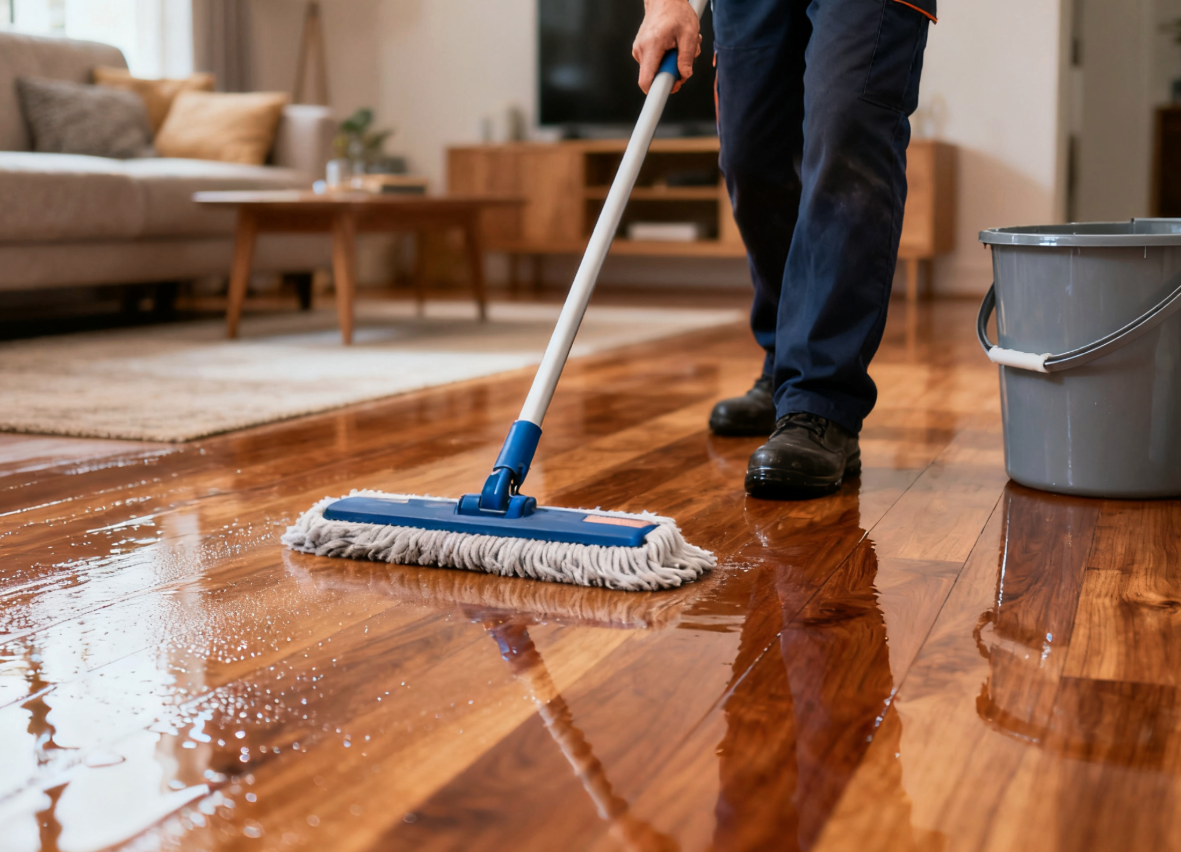
Always damp mop instead of soaking. Wring the mop thoroughly to avoid standing water.
Cleaning wood floors requires a gentle touch to preserve their natural beauty and longevity. Here’s a detailed guide on how to safely mop your wood floors:
Before you start mopping, it’s crucial to remove any loose dirt and debris. Use a dust mop or vacuum with a soft-bristle attachment to sweep away dust, hair, and small particles. This step prevents scratches and ensures that your mop can effectively clean the floor.
Choose a microfiber mop or a spray mop for the best results. These materials are gentle on wood and can effectively pick up dirt without scratching the surface. Dampen the mop with water or a wood floor cleaner, but avoid soaking it. Too much water can seep into the wood and cause damage.
Divide your floor into manageable sections to ensure thorough cleaning. Mop in the direction of the wood grain to avoid streaks and to minimize scratches. This method helps the cleaner work effectively and keeps the floor protected.
Standing water is a wood floor’s worst enemy. It can warp the boards and cause long-term damage. Ensure that your mop is only damp and wring out any excess water. Avoid pooling water by mopping in small sections and wringing the mop frequently.
After mopping, use a dry mop or cloth to remove any excess moisture. This step ensures that your floors dry quickly and prevents water spots or streaks. A quick pass with a dry cloth can make a big difference in maintaining the shine and protection of your wood floors.
Consistency is key when it comes to maintaining the beauty and durability of your wood floors. Different levels of cleaning are needed for different situations. Here’s a detailed cleaning schedule to help you keep your floors in top condition:
Focus on areas that see the most activity, such as kitchens and entryways. These spots tend to accumulate dirt, dust, and debris quickly. Use a soft-bristle broom or a dust mop to remove surface dirt and prevent it from scratching the floor. Daily sweeping helps maintain the floor’s shine and prevents dirt from embedding into the wood.
Once a week, give your floors a more thorough cleaning with a damp mop and a hardwood-safe cleaner. This step helps remove grime and dirt that daily sweeping might miss. Focus on medium-traffic areas where dirt can accumulate over time. Using a hardwood-safe cleaner ensures that your floors are cleaned without damaging the wood.
For a deeper clean, use a microfiber deep-clean pad or a spin mop. These tools are designed to target embedded dirt, pet hair, and seasonal grit that can build up over time. Deep cleaning helps restore the floor’s natural shine and removes stubborn dirt that regular mopping might not reach.
If your home has children, pets, or high foot traffic, you may need to increase the frequency of your deep cleaning sessions. More frequent cleaning helps prevent dirt and grime from causing long-term damage to your wood floors. Consider using protective pads under furniture legs and placing area rugs in high-traffic areas to reduce wear and tear.
Wood floors are beautiful, but spills and stains can quickly mar their surface. Acting promptly is essential to prevent long-term damage and maintain their shine. Here’s a practical guide on removing stains effectively while protecting your wood floor.
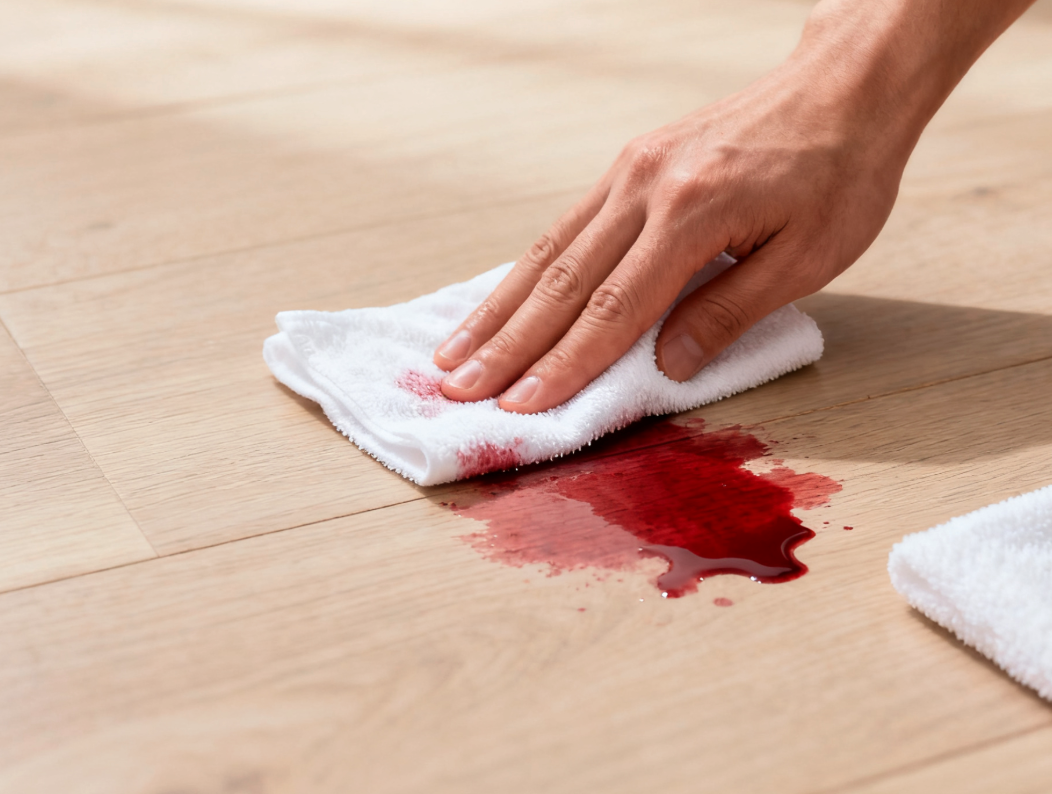
As soon as a spill occurs, grab a soft, clean cloth and gently blot the area. Avoid rubbing, which can spread the spill and scratch the surface. Quick action helps prevent liquids from penetrating deeper into the wood, especially on outdoor wood floors exposed to sunlight or moisture.
It’s tempting to use common household items like vinegar or baking soda, but these can damage your floor’s finish. Vinegar is acidic and may strip protective coatings, leaving the wood vulnerable. Instead, choose cleaners made specifically for wood floors. These solutions are gentle yet effective at lifting stains and dirt.
Some recommended options:
pH-neutral wood floor cleaners
Oxygen-based cleaners for tougher stains
Commercial hardwood cleaners for deep cleaning
For stubborn marks like grease, sap, or old spills, a hardwood-specific cleaner is best. Steps to follow:
1. Apply the cleaner directly to the stain.
2. Gently scrub along the wood grain with a soft-bristle brush.
3. Wipe the area with a clean, damp cloth to remove residue.
Avoid scrubbing too hard, which can scratch or dull your wood floor.
Some stains are deeply embedded or cover large areas. In these cases, professional cleaning may be necessary. Experts can remove tough stains without damaging your floor. Occasionally, if a single plank is severely stained, replacement might be safer than risking surrounding boards.
Preventing stains is just as important as removing them. Keep your wood floors in top condition by:
Using coasters under drinks and mats under potted plants
Placing area rugs in high-traffic zones
Sweeping or vacuuming regularly to remove dust and debris
Occasional damp mopping with wood-safe cleaners
Regular maintenance ensures both indoor and Outdoor Wood Floor surfaces stay beautiful for years.
Even small mistakes can lead to damage:
Using too much water on the floor.
Cleaning with acidic substances like vinegar or lemon juice.
Skipping dusting before mopping.
Ignoring manufacturer recommendations for sealed, waxed, or oiled wood.
Correct technique prevents scratches, streaks, and long-term damage.
Preventive measures extend the life of your wood floors:
Place area rugs or runners in high-traffic areas.
Remove shoes to reduce wear.
Attach felt pads to furniture legs to prevent scratches.
Wipe up spills immediately to avoid warping or staining.
| Prevention Tip | Reason |
|---|---|
| Area rugs | Trap dirt and grit before reaching wood |
| Shoe-free policy | Reduces scratches and scuffs |
| Felt furniture pads | Protects finish from daily movement |
| Immediate spill cleanup | Prevents water damage and stains |
They work together to maintain clean and beautiful floors.
A: Microfiber or spray mops control water and remove dirt effectively.
A: Avoid it. Vinegar is acidic and can dull finishes. Use pH-neutral cleaners.
A: Dust daily, damp mop weekly, deep clean every 2-3 weeks depending on traffic.
A: Not recommended. Steam can penetrate wood fibers, causing damage.
A: Yes, using hardwood-safe disinfecting cleaners like Lysol® for non-porous floors.
Our high-quality wood flooring products are designed to last, but proper cleaning is essential. Microfiber mops, spray mops, and pH-neutral cleaners are all safe and effective options that we recommend. Avoid standing water, acidic cleaners, and harsh scrubbing to keep your floors in pristine condition. With regular maintenance, preventative measures, and proper technique, your floors will stay shiny and long-lasting. Trust Foshan Zesheng Building Materials Co. Ltd for your flooring needs, and we’ll help you keep your wood floors looking new for years, even with heavy foot traffic.