
Views: 0 Author: Site Editor Publish Time: 2025-09-20 Origin: Site


Wood floors look elegant, but they can create an annoying problem—beds that keep sliding. A moving bed is noisy, unsafe, and it can scratch your hardwood. Let’s break down why it happens and what you can do to fix it.
Beds don’t always stay in place on wood because the smooth surface reduces grip, causing legs or casters to glide more easily. The problem is even worse with lightweight frames, especially when people toss and turn during the night. Sometimes the sliding happens because the frame rests on wheels or bare metal feet that have little traction. Even normal sleep movements can shift the frame slightly, and seasonal humidity changes that shrink or expand the flooring can make the issue more noticeable.
A sliding bed is more than a small inconvenience. It can harm both you and your home.
Injury risk: Falls happen when the bed shifts unexpectedly.
Floor scratches: Heavy legs dig grooves into hardwood.
Poor comfort: The bed creaks, moves, feels unstable.
Extra danger for seniors: Stability is vital for aging safely at home.
| Problem | Impact on You | Impact on Floor |
|---|---|---|
| Bed shifts at night | Interrupted sleep | None |
| Bed rolls forward | Risk of falling | Scratches, dents |
| Frame tilts | Unsafe for elderly | Uneven pressure marks |
Preventing a bed from sliding on a wood floor can be a challenge, but there are several effective solutions. The best method depends on your bed frame, budget, and the type of floor you have. Here are some detailed options to consider:
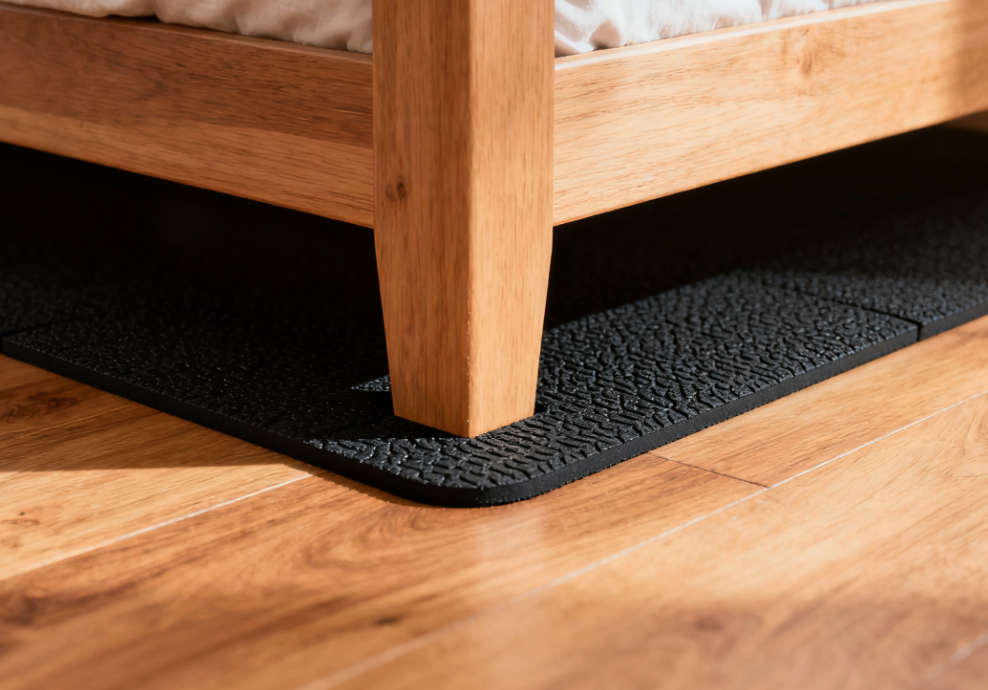
Non-slip pads and furniture grippers are designed to provide traction between the bed legs and the floor. They work similarly to how sneakers grip a basketball court, preventing the bed from moving.
Installation: Simply slide these pads under each leg of the bed. No tools are required, making this a quick and easy solution.
Cost: These pads are generally affordable and can be found at most home improvement stores or online retailers.
Durability: They are long-lasting if properly maintained and kept clean.
Best For: Small to medium-sized beds that don’t weigh too much. They are particularly effective for guest rooms or children’s rooms where the bed is not subjected to excessive movement.
Some bed frames come equipped with rubber feet that increase traction on hard surfaces. If your bed has wheels (casters), check if they have built-in locks. Locking casters can keep the bed firmly in place.
Upgrade: If your bed has cheap or non-locking wheels, consider upgrading to heavy-duty casters with locks. These casters provide a tighter grip and better protect your floors from scratches.
Installation: Replacing casters may require some basic tools and a bit of effort, but it’s a worthwhile investment for long-term stability.
Cost: Heavy-duty casters can be more expensive than basic ones, but they offer better performance and durability.
Best For: Beds that are frequently moved, such as those in dorm rooms or multi-purpose rooms.
Furniture stoppers and caster cups are small devices that fit under the bed legs or wheels to prevent movement.
Furniture Stoppers: These are like little bowls that hold the bed legs steady. They are easy to install and can protect your hardwood floors from dents and scratches.
Caster Cups: For beds on wheels, caster cups trap the wheels inside, preventing them from rolling. They are particularly useful for beds that are moved frequently.
Installation: Simply place the stoppers or cups under the bed legs or wheels. No tools are required.
Cost: These are generally inexpensive and widely available.
Best For: All bed sizes, especially larger beds that are difficult to move once in place.
Placing an area rug under the bed can add both style and friction, preventing the bed from sliding.
Rug Selection: Choose a rug that is thick enough to provide cushioning and has a non-slip backing to prevent the rug itself from moving.
Installation: Lay the rug under the bed, ensuring it covers the area where the bed legs will rest.
Benefits: In addition to preventing sliding, a rug can add warmth and sound insulation to the room.
Cost: The cost can vary widely depending on the quality and size of the rug.
Best For: Bedrooms where you want to add a decorative touch while solving the sliding problem.
For a more permanent solution, you can attach the headboard to the wall using brackets or other mounting hardware.
Installation: This method requires some basic tools and knowledge of wall mounting. Ensure the brackets are securely fastened to the wall studs for maximum stability.
Cost: The cost depends on the type of brackets and hardware you choose.
Best For: Master bedrooms or any room where you want a stable, immovable bed. This method is not recommended for renters unless you are willing to patch the holes in the wall when you move out.
If you prefer a quick and inexpensive solution, there are several DIY fixes you can try:
Yoga Mat Squares: Cut an old yoga mat into small squares and place them under the bed legs. The rubber material provides good traction.
Rubber Shelf Liners: These can be cut to size and placed under the bed legs to prevent slipping.
Double-Sided Carpet Tape: Apply double-sided carpet tape to the bottom of the bed legs. This can provide a strong grip and prevent movement.
Cost: These DIY solutions are very affordable and can be made from items you may already have at home.
Best For: Temporary solutions or for those on a tight budget. These methods are quick and easy to implement.
Not every option suits everyone. Pick based on your needs:
Light beds: Non-slip pads or DIY hacks.
Heavy beds: Wall brackets or locking casters.
Budget fix: Furniture cups or cut-up mats.
Elderly at home: Secure wall attachment for maximum stability.
Rental property: Pads and cups—no drilling, no damage.
Stopping movement is only half the job. You also want to keep your wood looking great. When it comes to preventing bed sliding, it’s important to choose solutions that not only stabilize your bed but also protect the beauty and longevity of your wood floor.
Bare metal stoppers might seem like a quick fix, but they can easily scratch your wood floor. Metal-on-wood contact can lead to unsightly marks and damage over time. This is especially problematic if you have a high-quality or antique wood floor that you want to preserve.
A better solution is to combine rubber stoppers with felt pads. Rubber stoppers provide excellent grip and prevent the bed from sliding, while felt pads underneath the rubber stoppers act as a buffer. The felt helps to distribute the weight more evenly and prevents the rubber from directly contacting the wood, reducing the risk of scratches. This combination offers both stability and protection for your floor.
Dust might seem harmless, but it can actually lower the friction between the bed and the floor. Dust particles can act as tiny ball bearings, allowing the bed frame to slide more easily. Regularly cleaning your wood floor to remove dust and debris can significantly improve the effectiveness of any anti-slip measures you take. Use a soft cloth or a vacuum cleaner with a soft brush attachment to gently remove dust without scratching the floor.
No, quality rubber or silicone won’t hurt your floor. Cheap plastics may leave stains.
Yes. Industrial Velcro works well if you want a semi-permanent hold.
Safe if done correctly. Not ideal for renters or thin walls.
Use caster cups or locking wheels. Both prevent rolling instantly.
Cover future contact points with felt pads and use stoppers. Refinish scratches if needed.
A sliding bed is more than just annoying—it’s a safety issue. Simple solutions like pads, caster cups, or rugs work for most homes. For maximum stability, wall brackets or locking casters keep everything in place. At Foshan Zesheng Building Materials Co. Ltd, we offer a range of high-quality materials and solutions designed to enhance your home’s stability and safety. Take action today to protect your wood floor and enjoy a safer, steadier sleep environment with our reliable products.


